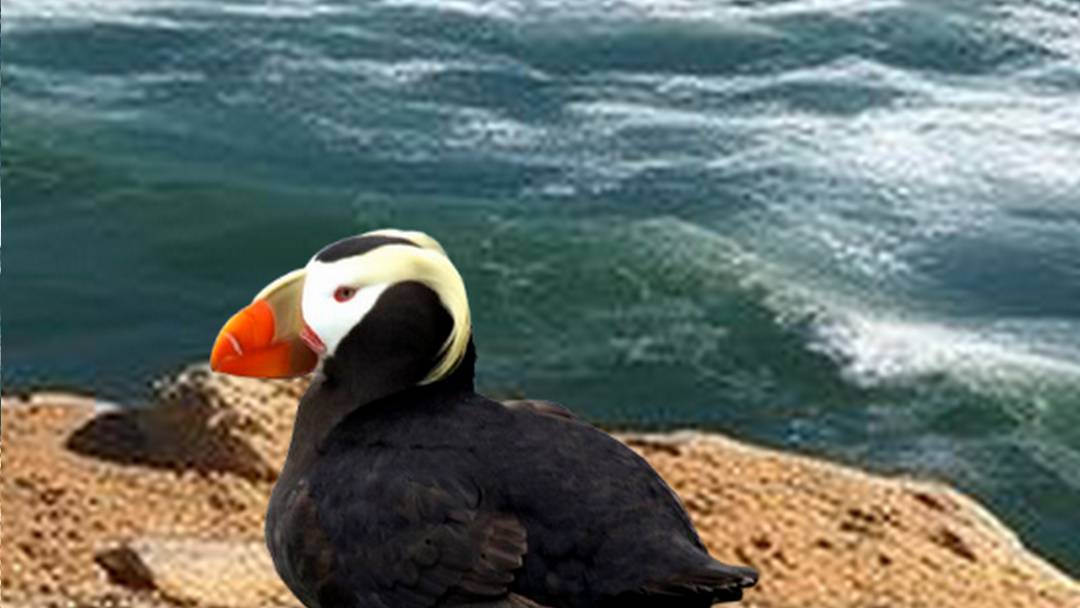
The Tufted Puffin (Fratercula cirrhata): The Majestic Seabird of the North Pacific
The Tufted Puffin is easily identified by its striking golden head plumes during the breeding season.
The Iconic Seabird with Golden Tufts
The Tufted Puffin (Fratercula cirrhata) is a distinctive and charismatic seabird of the North Pacific Ocean. Instantly recognizable by its long, golden-yellow head plumes during the breeding season, this fascinating bird is an iconic resident of coastal cliffs and islands. Known for its incredible diving abilities and colonial nesting habits, the Tufted Puffin captivates observers with its striking appearance and resilience in harsh marine environments.
Our Expert's Advice
By the Les-Oiseaux.com team, published September 27, 2025.
My personal advice: Tufted Puffins are wild birds and should be observed from a respectful distance, especially during nesting season. To see them, visit coastal wildlife refuges or take boat tours in their North Pacific range. Always prioritize their well-being by avoiding disturbances, keeping noise levels low, and properly disposing of waste to protect their marine habitat. Supporting organizations that work on marine conservation is vital for their future.
🦜 Become a Marine Bird Expert!
Fascinated by majestic seabirds like the Tufted Puffin? Subscribe to receive exclusive information on marine birds and their conservation.
No spam and easy unsubscribe.
How to Identify a Tufted Puffin
The Tufted Puffin is one of the most striking seabirds in its range. Key identification features include:
Golden-yellow Head Tufts: Long, flowing plumes that extend from behind the eyes during the breeding season. These are shed in winter.
Large, Colorful Bill: A thick, triangular bill that is bright orange-red, often with a yellow base, especially vibrant during breeding.
White Face Patch: A prominent white patch on the side of the head, contrasting with its dark body.
Dark Body Plumage: The rest of the body is predominantly dark, often black or dark brown.
Reddish-Orange Legs and Feet: Brightly colored, aiding in underwater propulsion.
Juvenile Tufted Puffins lack the golden tufts and have a duller, smaller bill, making them look similar to Horned Puffins but without the distinct "horn" above the eye.
Personality and Behavior
Tufted Puffins are highly adapted to a marine lifestyle. At sea, they are relatively solitary, spending most of their time foraging. During the breeding season, however, they are highly social, forming dense colonies on remote islands and cliffs. They are skilled divers, using their powerful wings to "fly" underwater in pursuit of fish. On land, they often appear somewhat clumsy, waddling upright, but are surprisingly agile when excavating burrows for nesting.
They are generally shy around humans in the wild, but can be observed at close range in protected areas where they are accustomed to non-threatening presence.
Male vs. Female: Visual Similarities
Similar to many seabird species, Tufted Puffins are sexually monomorphic. This means that male and female puffins look virtually identical, sharing the same distinctive plumage, head tufts, and bill coloration during the breeding season. While males might be slightly larger on average, this difference is not discernible to the naked eye.
The only reliable way to determine the sex of a Tufted Puffin is through specialized methods like DNA testing or internal examination, typically performed by researchers for conservation or study purposes.
Dimensions and Characteristics
Characteristic
Male
Female
Average / Observation
Length
35 – 40 cm
35 – 40 cm
Approximately 38 cm
Weight
700 – 800 g
700 – 800 g
720 – 780 g
Wingspan
60 – 70 cm
60 – 70 cm
Approximately 63 cm
Speed
Powerful, direct flight; agile underwater
Powerful, direct flight; agile underwater
Wing-propelled diving, up to 60m deep
Lifespan
15 – 20 years
15 – 20 years
15-20+ years
The Vocalizations of the Tufted Puffin: Grunts, Growls, and Colony Chatter
While often silent at sea, Tufted Puffins become quite vocal when gathered at their bustling breeding colonies. Their calls are not melodic songs but rather a repertoire of functional sounds used for communication within the colony.
The most common vocalizations are low, guttural grunts and growls. These sounds are used in various social interactions, such as establishing territory, interacting with a mate, or during aggressive encounters with rivals. They may also produce raspy, cackling calls. The overall sound of a large puffin colony is a cacophony of these deep, sometimes harsh, vocalizations, creating a unique and lively auditory experience on their nesting grounds.
0:00 / 0:00
Tufted Puffin vs. Other Puffins
The Tufted Puffin shares its range with other puffin species. Here's how to tell them apart:
Species
Key Identifying Feature
Tufted Puffin
Long, golden-yellow head tufts, white face patch, large orange/red bill.
Atlantic Puffin
No head tufts, grey face, distinct triangular bill plates, black back and white belly. (Found in the Atlantic, not Pacific).
Horned Puffin
Small, fleshy, black "horn" above the eye, orange plate at the base of the bill, white belly. (Shares Pacific range with Tufted).
Conservation and Observing Tufted Puffins
Tufted Puffins are wild seabirds and are not kept as pets due to their specialized diet, vast habitat requirements, and natural behaviors. Efforts are focused on their conservation in the wild.
Habitat Protection: Protecting their nesting colonies on remote islands and cliffs, as well as their marine foraging grounds, is paramount.
Sustainable Fishing: Advocating for fishing practices that do not deplete their prey species or result in bycatch helps ensure food availability.
Responsible Observation: If you are lucky enough to observe them, do so from a distance with binoculars or telephoto lenses to avoid disturbing them. Many wildlife tours offer ethical viewing opportunities.
Lifespan
In the wild, a Tufted Puffin typically lives for 15 to 20 years, and sometimes even longer. Their longevity is a testament to their adaptability and resilience in the challenging marine environment, though it can be impacted by environmental threats.
Habitat and Distribution
The Tufted Puffin is widely distributed across the cool temperate and subarctic waters of the North Pacific Ocean. Its range extends along the western coasts of North America, from Alaska and the Aleutian Islands, south through British Columbia, Washington, and Oregon, reaching as far south as central California.
On the Asian side of the Pacific, they breed along the coasts of Siberia, the Kamchatka Peninsula, the Kuril Islands, and northern Japan. During the non-breeding season, they disperse widely across the open ocean, often far from land, typically remaining within the North Pacific basin.
These birds primarily inhabit areas with steep, grassy slopes or rocky cliffs on offshore islands, which provide ideal locations for nesting burrows and protection from terrestrial predators.
Distribution Map
Conservation Status
The Tufted Puffin is currently classified as "Least Concern" (LC) on the IUCN Red List. This categorization is based on its very large range and, globally, a relatively stable population trend.
However, regional populations, particularly in the southern parts of its range (e.g., California), have experienced significant declines. The species faces various threats, including:
Habitat Degradation: Loss of nesting habitat due to erosion, introduced predators (like foxes and rats on islands), and human disturbance.
Climate Change: Changes in ocean temperature and currents can affect the distribution and abundance of their prey fish.
Marine Pollution: Oil spills and persistent pollutants accumulate in the marine food web, impacting puffin health and reproductive success.
Overfishing: Competition with commercial fisheries for small schooling fish can reduce food availability.
Despite the global "Least Concern" status, ongoing monitoring and local conservation efforts are crucial to address these threats and ensure the long-term health of Tufted Puffin populations across the North Pacific.
Frequently Asked Questions (FAQ)
What are the most distinctive features of a Tufted Puffin?
The Tufted Puffin is most recognizable by its long, golden-yellow head plumes (tufts) that extend from behind its eyes during the breeding season. It also has a large, bright orange and red bill, and a white face patch against a dark body.
Where do Tufted Puffins live?
Tufted Puffins are native to the North Pacific Ocean. They can be found along coastal areas, nesting in large colonies on islands and sea cliffs from Alaska and British Columbia down to parts of California, and across to Japan and Russia.
What do Tufted Puffins eat?
Tufted Puffins primarily feed on small fish such as sandlance, herring, and capelin, which they catch by diving underwater. They also consume squid and various marine invertebrates.