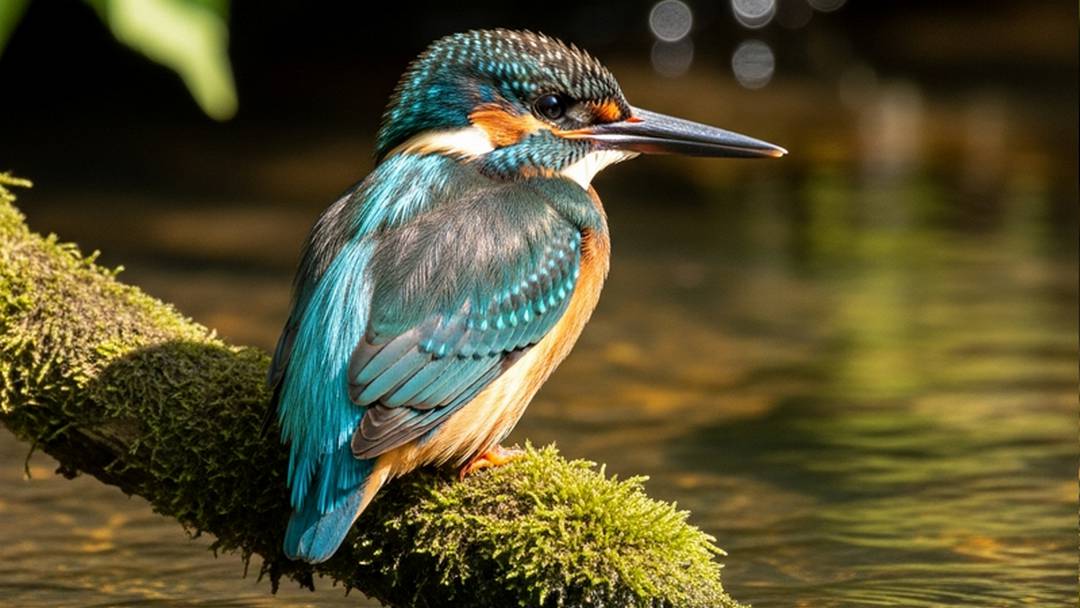
The Common Kingfisher, a "blue arrow" of waterways.
Introduction
The Common Kingfisher (Alcedo atthis) is a small aquatic bird, a member of the Alcedinidae family, globally recognized for its spectacular plumage and lifestyle linked to clear waters. Nicknamed the "blue arrow" due to its fast, direct flight low over the water, it is a valuable indicator of good water quality in aquatic environments. Its dimensions are generally as follows:
Length: 15 to 20 cm (average 16-17 cm)
Wingspan: 23 to 28 cm (average 24-26 cm)
Weight: 25 to 46 grams (average 30-45 g)
This solitary bird is an agile hunter, specializing in catching small fish with vertical dives. It is found in much of Europe, Asia, and North Africa.
Our Ornithologist's Advice
By the Les-Oiseaux.com.com team, published August 1, 2025.
My personal advice: The Common Kingfisher is one of our most iconic birds and highly sought after by observers. To maximize your chances of spotting it without disturbing it, here are some tips:
Listen for its call: You'll probably hear it long before you see it! Its call is a high-pitched, short, piercing whistle, typically transcribed as "tseee" or "tchiii," which it often emits in flight. Stay attentive along rivers and ponds.
Look for perches: Kingfishers hunt from low perches, such as bare branches, sturdy reeds, or stakes overhanging the water. Locate these strategic points and be patient. Once it spots its prey, its dive is lightning-fast!
Observe water quality: The presence of kingfishers is an excellent sign of a waterway's good health, as it needs clear, fish-rich waters to feed.
With its jewel-like plumage and relentless hunting technique, the Kingfisher is always an unforgettable sight. Keep a good pair of binoculars handy!
Have you observed the Common Kingfisher?
Share your experience and photos! Your observations enrich the Les-Oiseaux.com community.
You can share as a guest or create an account to track your contributions.
Identification
The Common Kingfisher is one of Europe's most colorful and recognizable birds.
Plumage: Its back, head, and wings are covered in iridescent metallic blue, leaning towards turquoise, with a particularly vivid cobalt blue rump. The throat is white, and a white patch is visible on the sides of the neck. The breast and belly are a brilliant rufous-orange.
Bill: It has a long, powerful, and pointed bill, dagger-shaped, adapted for fishing. The male's bill is entirely black, while the female's has an orange base on the lower mandible, as if she were wearing "lipstick."
Head and Body: It has a large head, a short, stocky body, and tiny, bright red legs.
Juvenile: Young birds resemble adults but their plumage is duller, and they may have brown spots on the breast, as well as a whitish tip to the bill.
Juveniles have less vibrant plumage and can be distinguished by darker markings.
Dimensions and Scientific Records (Common Kingfisher)
Characteristic
Male
Female
Record / Average
Length
15 – 20 cm
15 – 20 cm
16 – 17 cm
Weight
25 – 46 g
25 – 46 g
30 – 45 g
Wingspan
23 – 28 cm
23 – 28 cm
24 – 26 cm
Flight Speed
40 – 80 km/h
40 – 80 km/h
Up to 45 km/h (estimated), max 80 km/h
Lifespan
Up to 21 years
Up to 21 years
10 – 15 years (in the wild)
These figures highlight the small size of the Common Kingfisher and its adaptation to fast flight for hunting.
Not to be confused with...
The Common Kingfisher is a very distinctive bird in Europe. Its unique combination of vibrant colors (iridescent blue and orange), stocky body, and long bill make it difficult to confuse with other birds present on the continent. In adult plumage, it is largely inimitable. However, from a distance or in low light, an inexperienced observer might mistake it for other species depending on the context.
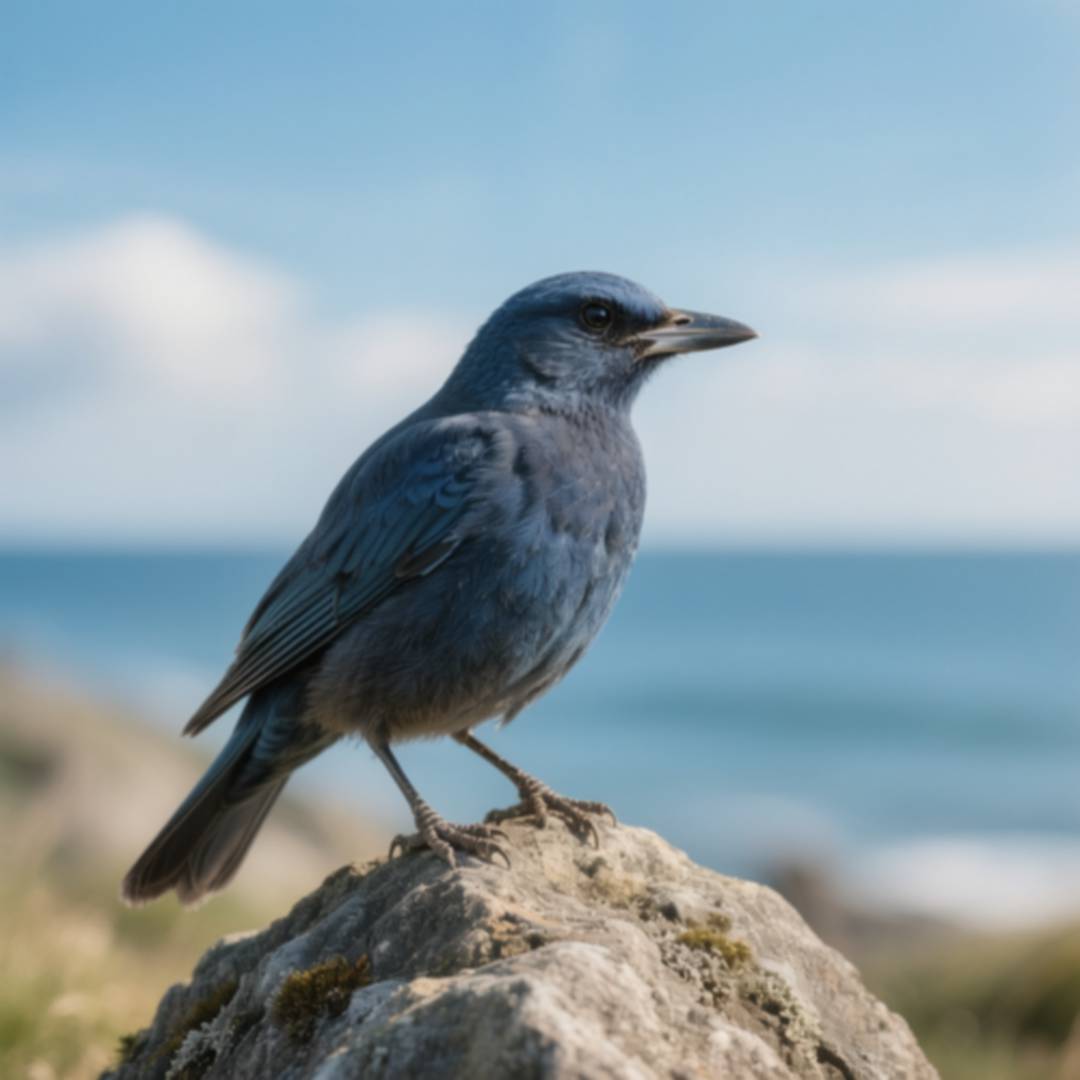
Blue Rock Thrush (Monticola solitarius)
Although bluish in color, the Blue Rock Thrush is larger, has a slender but much shorter bill, and does not have the rufous-orange belly or the characteristic flight of the Kingfisher. It is not associated with aquatic environments for hunting.
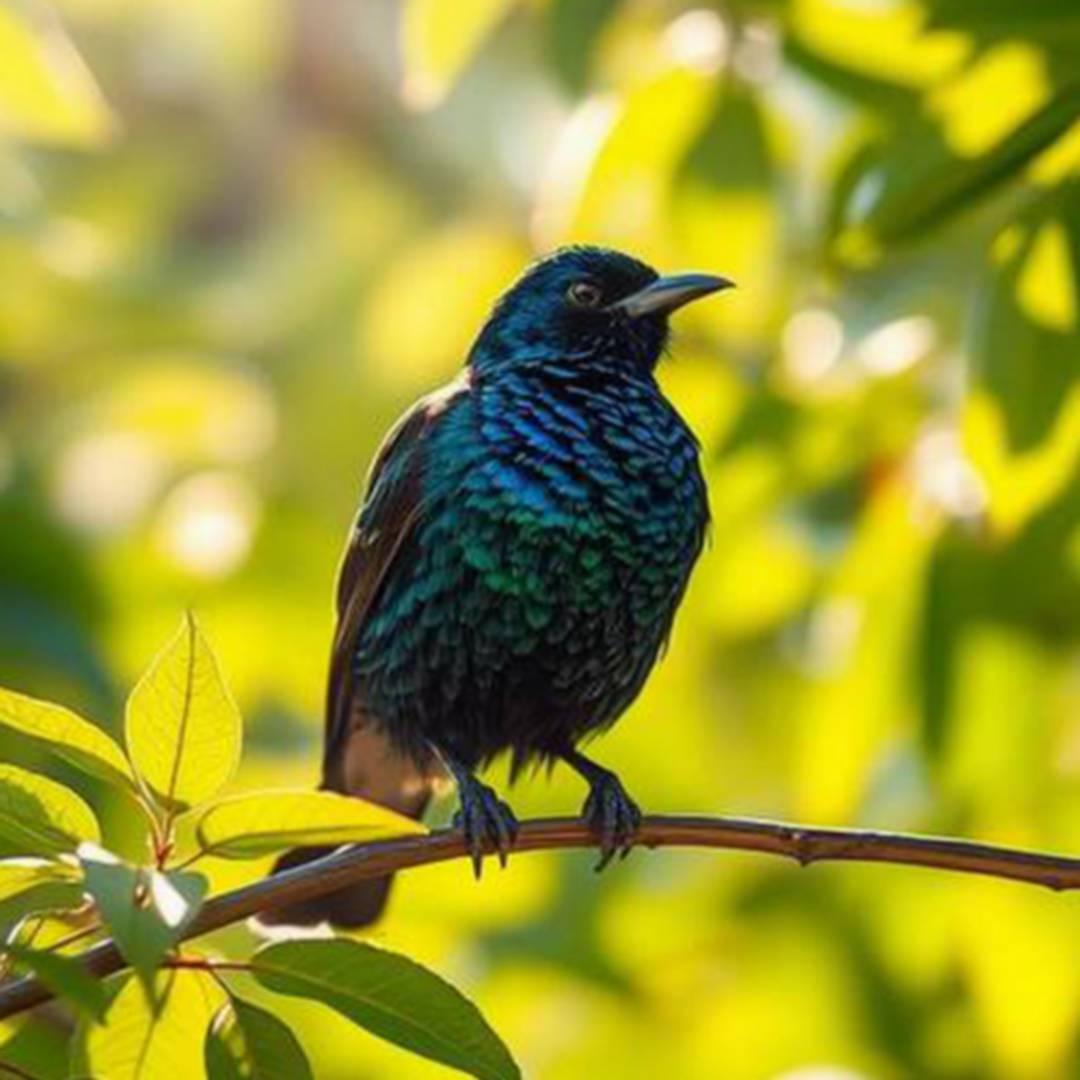
Common Starling (Sturnus vulgaris)
In bright sunlight, the Common Starling's black plumage can reveal metallic green and blue reflections. However, its silhouette is much more slender, its bill is shorter and yellow, and it has no rufous coloration on its belly. Its habitat and behavior are also very different.
The Common Kingfisher is more often heard than seen. Its most characteristic call is a high-pitched, short, piercing whistle, generally transcribed as "tseee" or "tchiii." This call is emitted in flight, often as it darts rapidly over the water. It also has alarm calls, such as a "tzutt tzutt." The vocal repertoire is quite simple and primarily used to signal its presence or to alert to danger.
0:00 / 0:00
Habitat and Distribution of the Common Kingfisher
The Common Kingfisher is a Holarctic species, widely distributed across Europe, Asia, and North Africa. It is a characteristic inhabitant of freshwater aquatic environments, preferring calm, clear, shallow, and fish-rich waters. It is found along rivers, streams, lakes, ponds, flooded quarries, and canals. The presence of steep, friable (sandy-loamy) banks is essential for nesting, as this is where it digs its burrow. It also needs low perches (branches, stakes) from which it can watch for prey before diving.
Distribution Map
Present all year (Resident)
Breeding range
Wintering range (Non-breeding)
Passage area (Migration)
Diet
The Common Kingfisher is a specialized piscivore, its diet mainly consisting of small fish. It targets prey typically measuring between 4 and 12.5 cm, such as minnows, roach, trout, sticklebacks, or bullheads. To hunt, it perches on a branch or stake overhanging the water, or hovers, before diving headfirst to catch the fish with its bill. Once the prey is caught, it returns to its perch to stun it against a hard surface and swallow it headfirst. It may occasionally supplement its menu with aquatic insects (like backswimmers), crustaceans (gammarids), and small amphibians. Similar to other aquatic predators like the Grey Heron and the Great Crested Grebe, the Common Kingfisher displays remarkable agility in its search for food.
Reproduction
The breeding season of the Common Kingfisher generally extends from March/April to July, or even September. The pair digs a horizontal nesting tunnel up to 1.30 meters deep in a steep, friable (sandy-loamy) bank located above water level. This tunnel ends in a wider chamber where the nest is located. The female lays between 5 and 8 eggs, most often 6 to 7, which are incubated by both parents for 19 to 20 days. After hatching, the naked young leave the nest after approximately 4 weeks. To compensate for the low survival rate of juveniles, Kingfishers can have two to three broods per year. The courtship display involves rapid aerial pursuits and fish offerings from the male to the female. This strong reproductive capacity is also found in other common aquatic birds like the Mallard and the Common Moorhen.
Conservation Status
The Common Kingfisher is classified as "Least Concern" (LC) by the IUCN globally, as the species is widely distributed and not generally threatened. However, in Europe, it is considered "Vulnerable" (VU). The European population has experienced a moderate decline in the past but has stabilized, or even increased locally.
The main threats to the Kingfisher include habitat degradation and destruction, particularly the artificialization of riverbanks and the loss of wetlands, as well as water pollution, which reduces its food resources. Harsh winters can also have a significant impact on populations. In France and Europe, the species is protected and is listed in Annex I of the EU Birds Directive, prohibiting its capture, destruction, or the possession of its eggs and nests. Its presence is a good indicator of the ecological quality of an aquatic environment.
Frequently Asked Questions (FAQ)
How to identify the Common Kingfisher?
The Common Kingfisher is easily recognizable by its iridescent metallic blue plumage on its back, head, and wings, contrasting with its rufous-orange belly. It has a long, pointed bill and short, red legs. Its fast, direct flight low over the water is also distinctive.
Where does the Common Kingfisher live?
It inhabits calm, clear, shallow, fish-rich freshwater streams, rivers, ponds, and lakes. It needs perches overhanging the water and steep banks to dig its nest.
What does the Common Kingfisher eat?
It is a piscivorous bird that feeds mainly on small fish, which it catches by diving headfirst from a perch. Its diet can be supplemented with aquatic insects, crustaceans, and small amphibians.