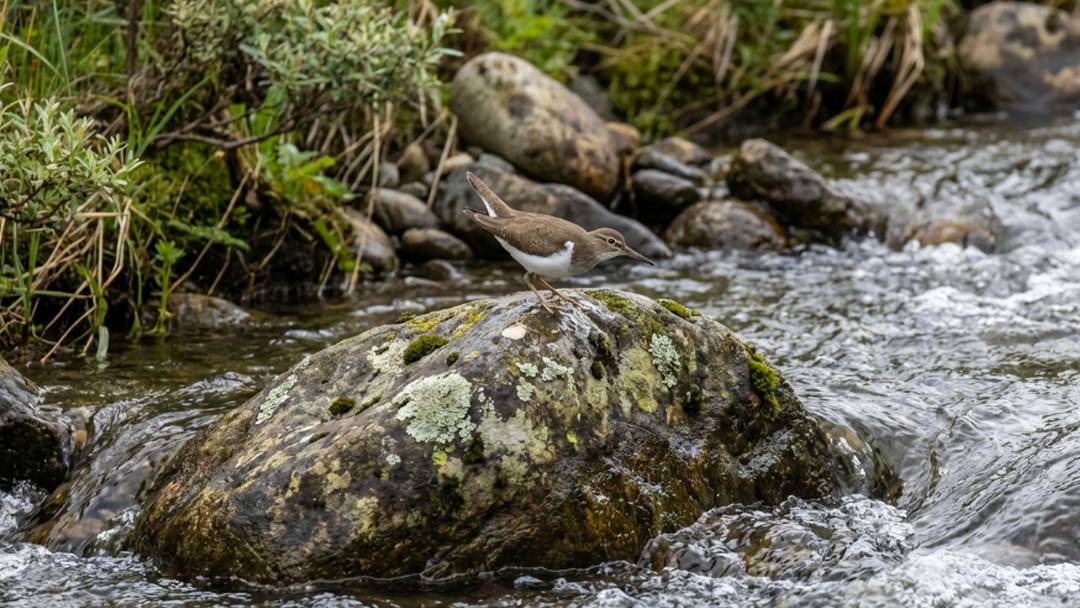
A solitary bird, easily recognized by its constant bobbing motion.
Introduction
The Common Sandpiper (Actitis hypoleucos) is a small wader of the Scolopacidae family. It is one of the most widespread sandpipers in Eurasia and Africa. Discreet but ubiquitous, it animates riverbanks and lakeshores with its nervous temperament. Its average dimensions are:
Length: 19 to 21 cm
Wingspan: 32 to 35 cm
Weight: 40 to 80 grams
Its French name, "Chevalier guignette", and its English name suggest its ubiquity. It is characterized by a distinctive behavior: a compulsive bobbing of the rear end, known as "teetering," visible as soon as the bird lands.
Our Ornithologist's Advice
By the Les-Oiseaux.com team.
My personal advice: The Common Sandpiper is often a solitary bird. If you see a small wader flying low over the water, screaming, away from the flock, it's probably him!
The "Bobbing": This is the absolute key to identification on the ground. When standing or walking, the tail goes up and down incessantly. It looks nervous.
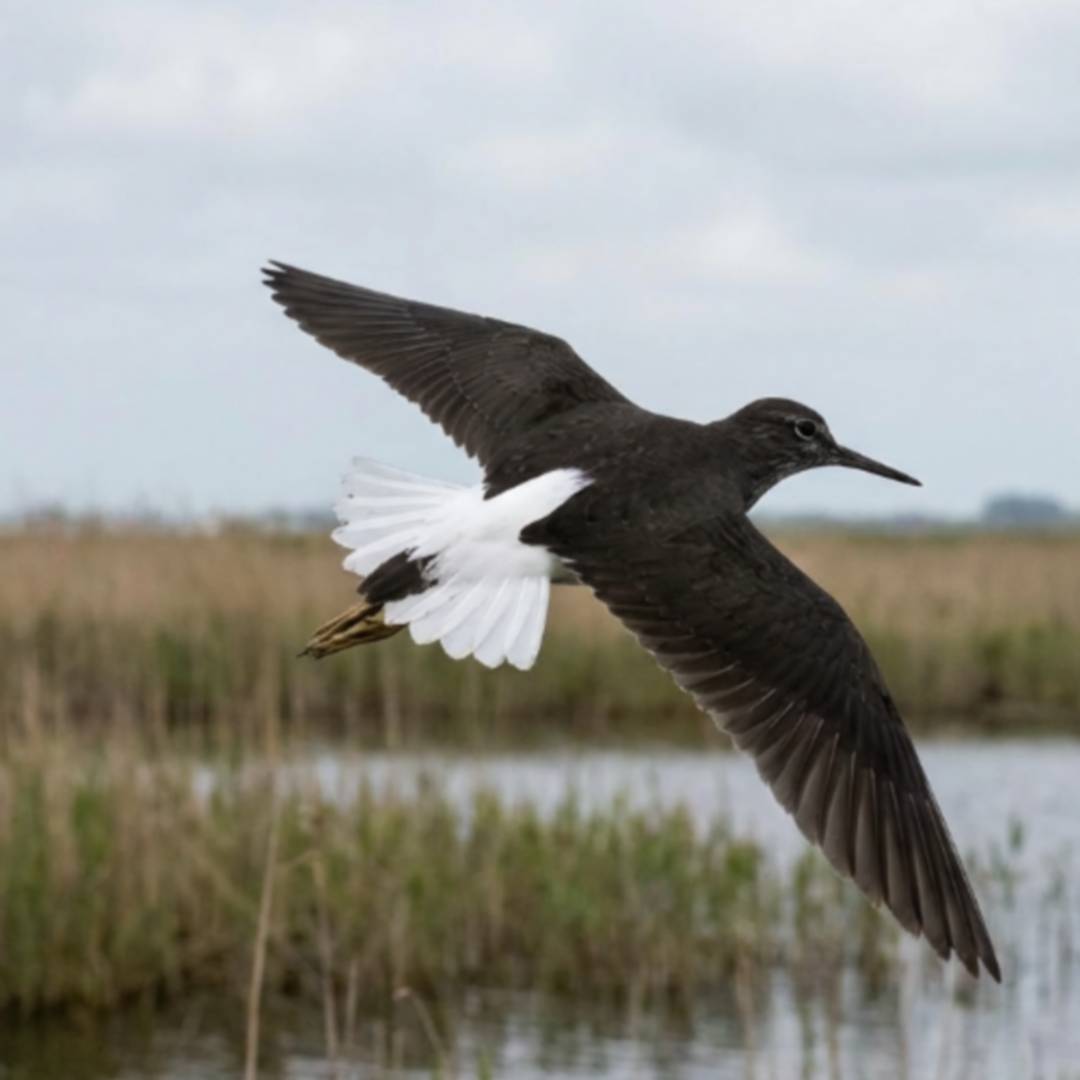
The Flight: Watch how it flies. It stays very low over the water surface. Its wings are held stiff and bowed (arched downwards), vibrating rapidly. It alternates flapping with short glides.
The White Braces: Look at the side of the bird, between the folded wing and the breast. You will see a wedge of white feathers extending upwards around the shoulder. This is a very reliable plumage feature.
Have you spotted a Common Sandpiper?
Share your experience and photos! Your sightings enrich the Les-Oiseaux.com community.
You can share as a guest or create an account to track your contributions.
Identification
The Common Sandpiper has a relatively cryptic plumage that helps it blend in with stones and mud.
Upperparts: Brownish-grey with fine dark streaks and faint barring. In breeding plumage, the markings are slightly bolder.
Underparts: Clean white on the belly and undertail. The breast is washed with brown-grey, forming a distinct pectoral band.
Key Feature: A white wedge (or "brace") extends from the white belly up between the dark wing and the dark breast patch. This is visible even from a distance.
Head & Bill: A pale supercilium (eyebrow) and a dark eyestripe. The bill is straight, medium length, and dark. Legs are pale greyish-green or yellowish.
In Flight: A clear white wing-bar is visible across the flight feathers. The rump is dark (brown), unlike the white rump of the Green Sandpiper.
Dimensions (Common Sandpiper)
Characteristic
Data
Length
19 – 21 cm
Weight
40 – 80 g
Wingspan
32 – 35 cm
Lifespan
8 to 14 years
Not to be confused with...
Green Sandpiper
Similar size but much darker (blackish) above with distinct white dots. In flight, it reveals a stark white rump contrasting with a black tail tip. It does bob its tail, but less frantically, and flies higher.
Wood Sandpiper
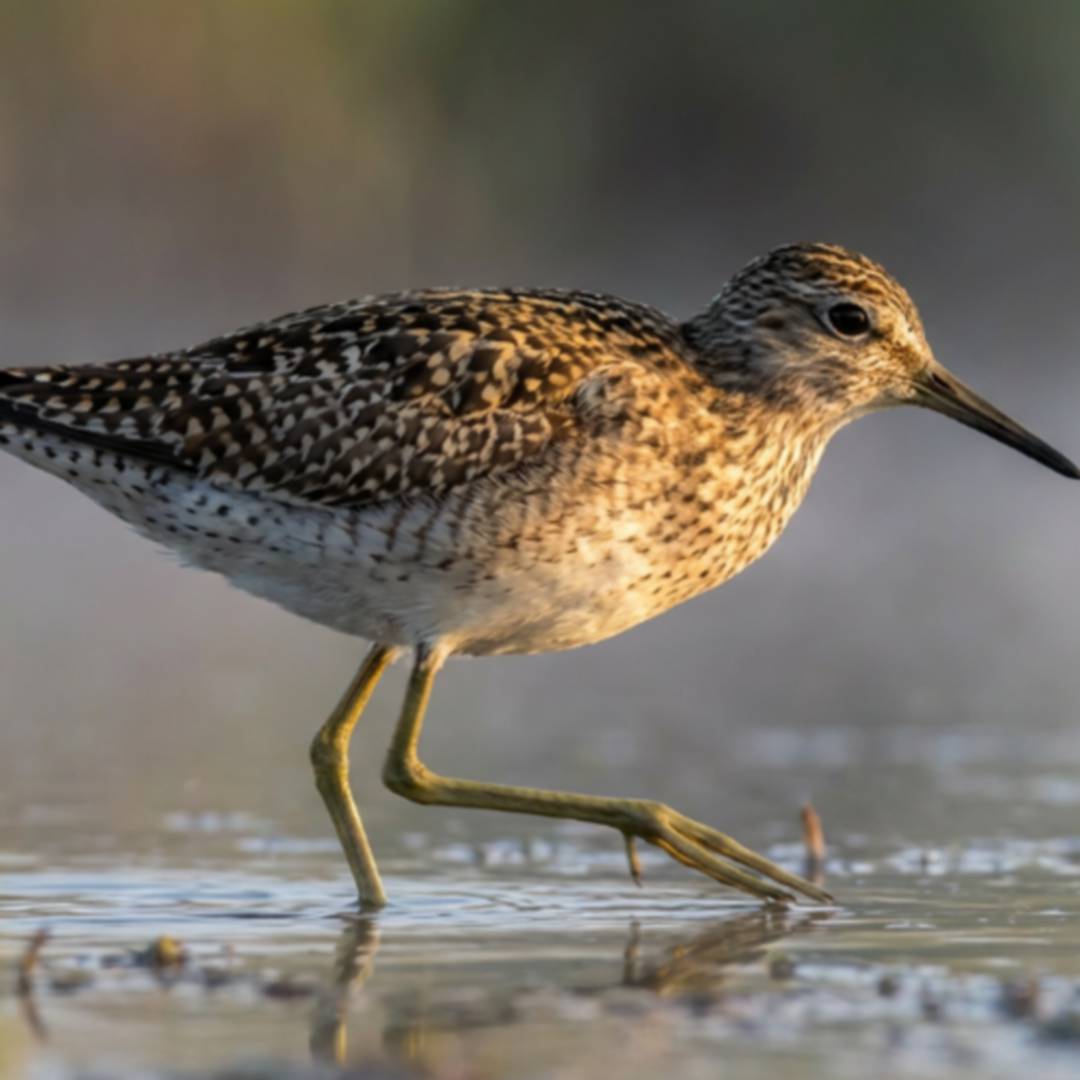
Usually has longer yellowish legs and a much more spotted ("spangled") back. The supercilium (eyebrow) is very prominent behind the eye. It is less solitary and more elegant in proportions.
Song and Calls
The Common Sandpiper is very vocal, especially when flushed.
Call: A high-pitched, penetrating, piping whistle, usually trisyllabic: "twee-wee-wee" or "swee-swee-swee". It is shrill and carries well over the noise of running water.
Song: During the breeding season, the male performs display flights with a rhythmic repetition of the call notes: "tui-tui-tui-tui...".
0:00 / 0:00
Habitat and Distribution
This is a widespread species across the Palearctic region.
Breeding: It favors the banks of fast-flowing rivers, mountain streams, and clear lakes with pebbly or sandy shores. It is often found in hilly or mountainous terrain but also breeds in lowlands near suitable water.
Wintering: A long-distance migrant, it winters in Africa, Southern Asia, and Australia. In winter, it occupies a wider variety of habitats: estuaries, coastal lagoons, mangroves, harbors, canals, and sewage ponds. Small numbers winter in Western Europe.
Distribution Map
Present all year (Resident)
Breeding range
Wintering range (Non-breeding)
Passage (Migration)
Diet
The Common Sandpiper is a visual hunter. It feeds by walking briskly along the water's edge, picking prey from the surface of the mud, sand, or water.
Insects: Flies, beetles, ants, and their larvae (often aquatic insects).
Crustaceans & Mollusks: Small crabs, shrimps, and snails (especially in winter/coastal areas).
Worms and Spiders: Occasionally taken.
It can sometimes be seen catching flying insects in the air.
Reproduction
The Common Sandpiper nests on the ground, usually close to the water.
The Nest: A shallow depression lined with grass, leaves, and moss. It is well hidden in dense vegetation (tall grass, bushes) or among river stones and driftwood.
Clutch: The female lays 4 pear-shaped, spotted eggs between May and June.
Incubation: Both parents share incubation for about 21-22 days.
The Young: The chicks are precocial (nidifugous). They leave the nest almost immediately after hatching and can feed themselves, though they are guarded by the parents. They fledge after about 26-28 days.
Conservation Status
The Common Sandpiper is classified as Least Concern (LC) by the IUCN. It has an extremely large range and a large global population.
However, like many riparian species, it is sensitive to the degradation of riverbanks, canalization of streams, and disturbance during the nesting season by recreational activities (fishermen, hikers).
Frequently Asked Questions (FAQ)
Why is it called "Common" Sandpiper?
Simply because it is the most frequently encountered sandpiper along inland waterways across Europe and Asia, unlike other species that are more restricted to specific marshes or coastal mudflats.
Does it migrate?
Yes, most populations are migratory. Birds breeding in Europe move to Africa and Southern Europe for the winter. They are often seen singly or in small groups during migration, rather than in huge flocks like Dunlins or Knots.