The Common Shelduck, a duck with the look of a goose.
Introduction
The Common Shelduck (Tadorna tadorna) is one of the largest and most colorful ducks on our coasts. Often described as an intermediate between a goose and a duck, it primarily inhabits estuaries, bays, and salt marshes. Its dimensions are impressive:
Length: 58 to 67 cm
Wingspan: 110 to 133 cm
Weight: 0.8 to 1.5 kg
It is a gregarious and noisy bird, easily observable thanks to its pied plumage (white, black, and chestnut) which is highly contrasted. It often shares its habitat with the Pied Avocet or the Mallard in brackish water zones.
Our Ornithologist's Advice
By the Les-Oiseaux.com team.
My personal advice: The Common Shelduck is unmistakable thanks to its colors, but to differentiate the sexes, look at the bill!
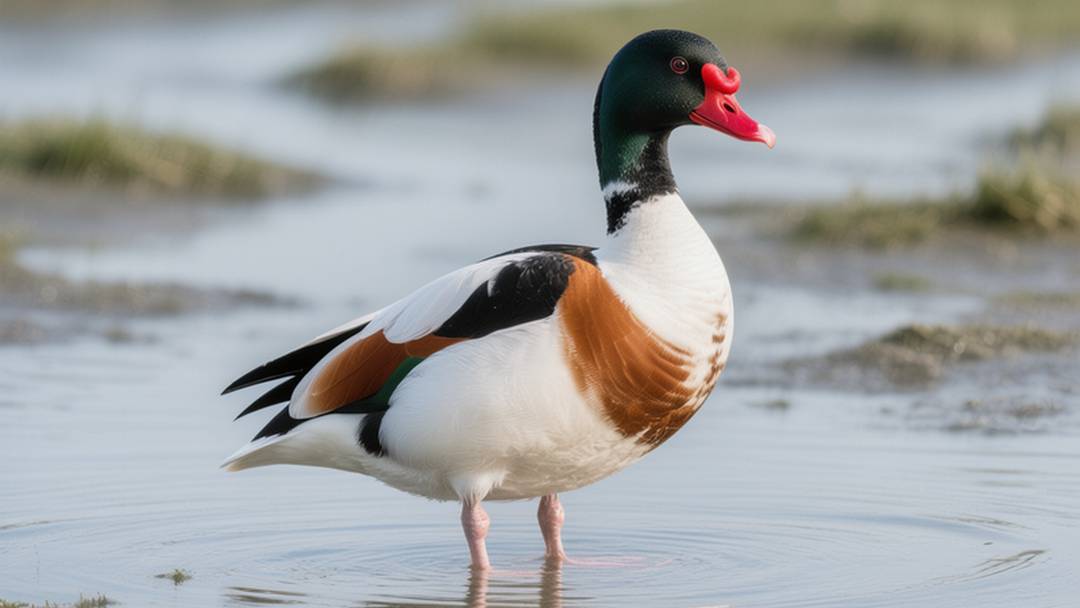
The male's knob: In spring (breeding season), the male sports a large bright red fleshy knob (a caruncle) at the base of the bill. The female lacks this, although her bill is also red.
The "crèches": In summer (July), observe calm stretches of water. You might see two adults watching over a troop of 20, 30, or even 50 ducklings! These are "crèches" where a few adults guard the young of several families while the other parents leave to moult.
Look for it at low tide on mudflats, where it filters the mud by swinging its head side to side, somewhat like an Avocet.
Have you seen a Shelduck crèche?
Share your observations on our community map.
You can share as a guest or create an account to track your contributions.
Identification
The Common Shelduck has a massive silhouette and an easy gait, almost like that of a goose.
Body: Mostly white, with a broad chestnut (rusty) breast band very visible that encircles the chest and upper back.
Head: Very dark bottle green (often appears black from a distance), contrasting with the bright red bill.
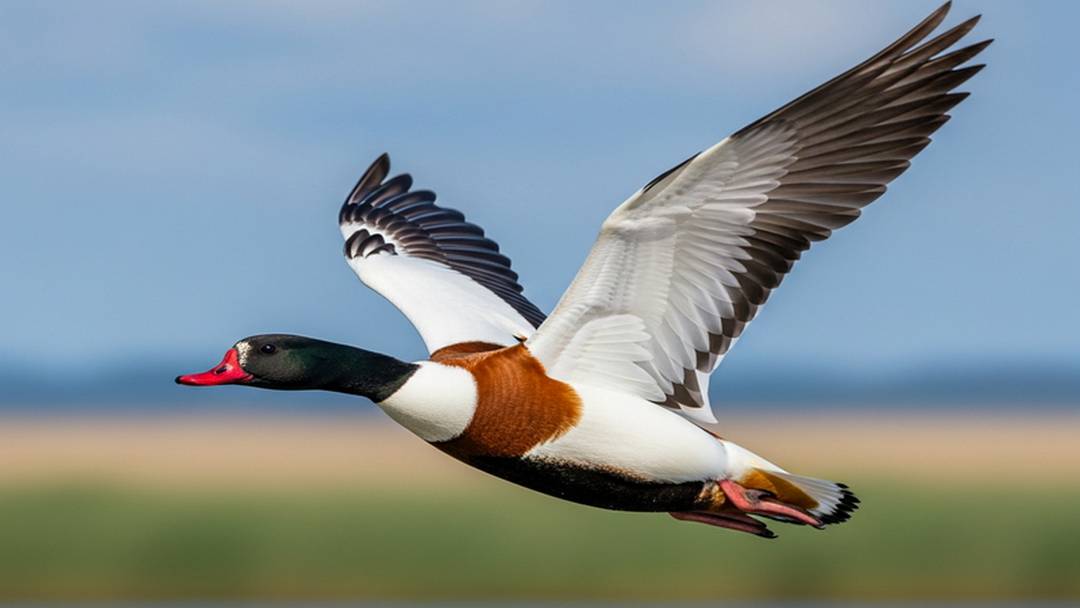
Wings: In flight, the underside is white with black flight feathers. The upper side shows white coverts, black scapulars, and a green speculum.
Bill and Legs: The bill is coral red. The legs are pinkish-flesh.
Juvenile: Very different, it lacks the chestnut band. It is greyish-white above, white below, with a white face and throat, lacking the green head.
In flight, its large size and colors make it unmistakable.
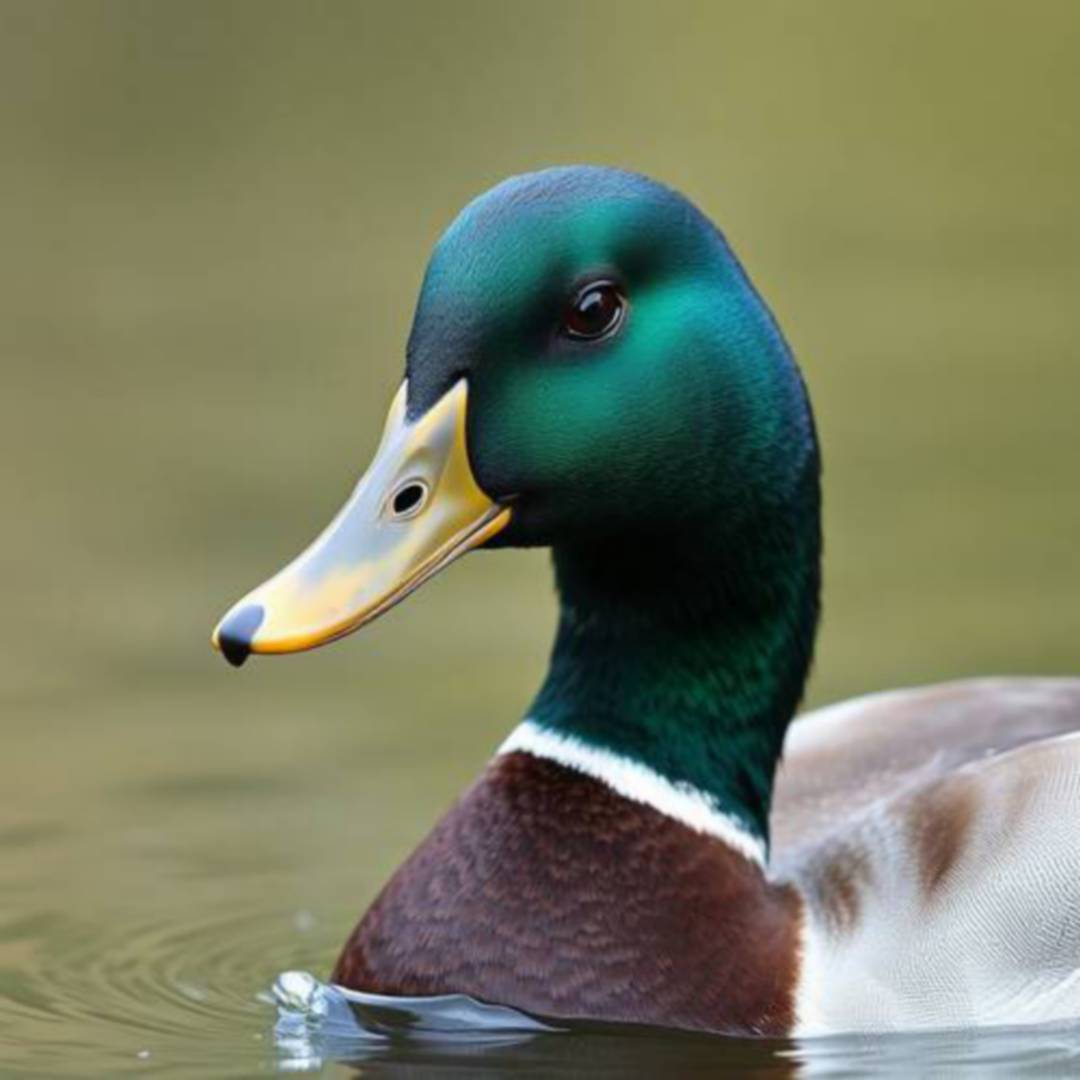
The male Mallard also has a green head, but its bill is yellow (not red), it has no chestnut breast band, and its body is grey, not white. The Shelduck is significantly larger.
Greylag Goose
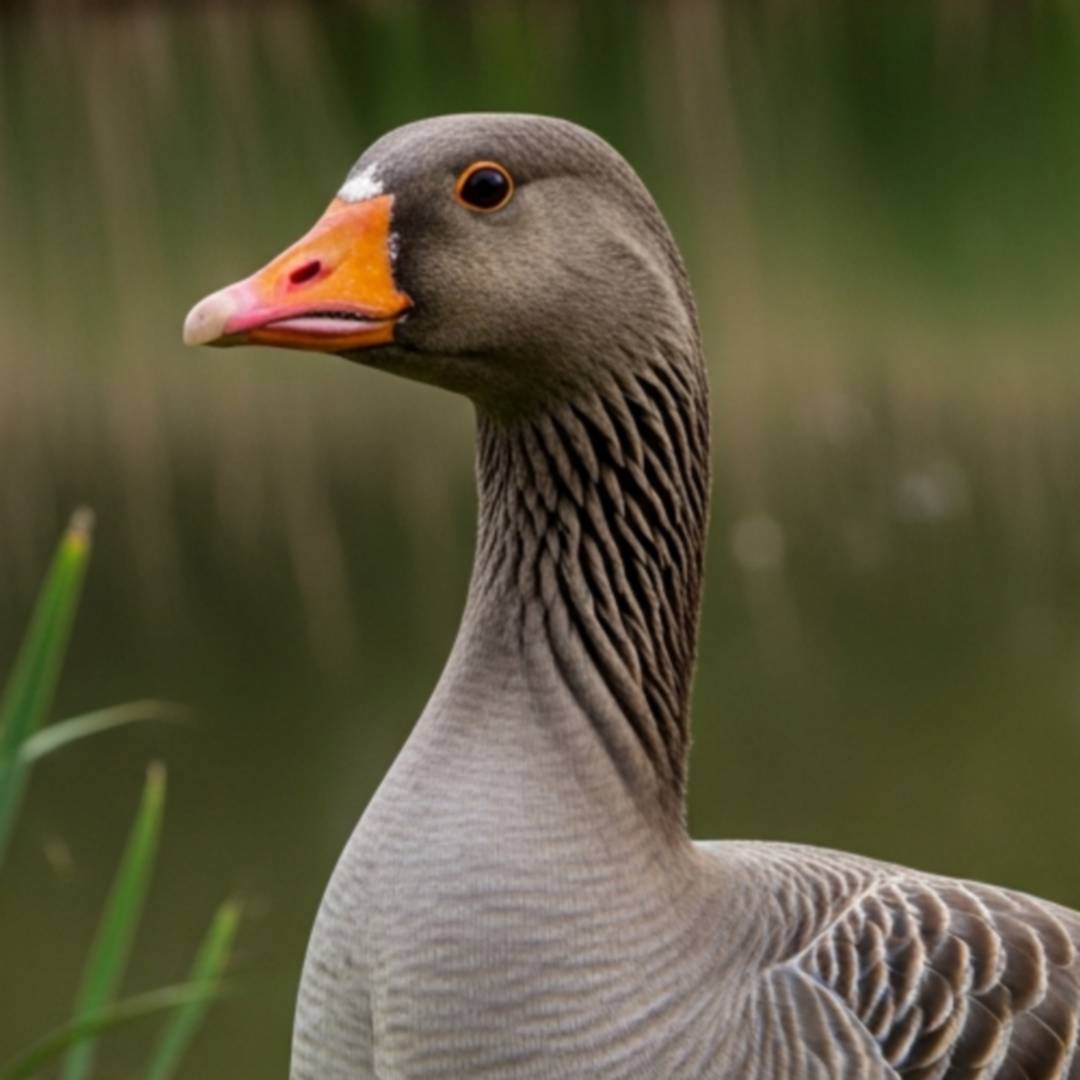
From a distance, the silhouette of the Shelduck can recall a small goose. However, the Greylag Goose is much larger, entirely grey-brown, and has an orange or pink bill, lacking the color contrast of the Shelduck.
Song and Calls
The Common Shelduck is quite vocal, especially in groups. Males and females emit very different sounds.
The Male: Emits clear and sonorous whistles, often repeated: "tchew-tchew...", audible from afar during displays.
The Female: Produces a rapid, deep, and nasal cackle, a sort of laugh "ag-ag-ag-ag" or "gah-gah-gah", often used to recall the young or warn.
0:00 / 0:00
Habitat and Distribution
The Common Shelduck is a typically Palearctic bird, present on the coasts of Western Europe (Atlantic, English Channel, North Sea) and around the Mediterranean. It is also found in Central Asia on saline lakes.
Habitat: It favors coastal areas with muddy or sandy bottoms: estuaries, bays, lagoons, and salt marshes. It is increasingly found inland, on large fresh or brackish water bodies, in the company of the Grey Heron or the Little Egret.
Migration: Populations are partially sedentary in Western Europe. A unique phenomenon exists in this species: the "moult migration". In late summer, the majority of European adults gather in the Wadden Sea (Germany/Netherlands) to moult safely, leaving the young in crèches.
Distribution Map
Present all year (Resident)
Breeding range
Wintering range (Non-breeding)
Diet
The Common Shelduck has a specialized diet, which explains its attachment to salty mudflats.
Main prey: A small gastropod mollusk very abundant in the mud, the Laver Spire Snail (Hydrobia ulvae).
It also consumes small crustaceans (crangon shrimps), marine worms, insects, and sometimes seeds or algae.
To feed, it uses a "scything" technique: it advances its bill into the mud or shallow water and performs rapid lateral movements to filter out small organisms.
Reproduction
The reproduction of the Common Shelduck is fascinating due to its use of cavities.
The Nest: Unlike most ducks, it nests in cavities. It very often uses rabbit burrows (hence its nickname "burrow duck" in some regions), but also hollow trees, rock crevices, or under buildings and dense brambles.
Clutch: The female lays 8 to 12 creamy white eggs between April and May.
Rearing: The chicks are precocial. As soon as they leave the burrow, they follow their parents to the water, sometimes walking several kilometers. This is when the famous "crèches" are formed.
Conservation Status
The Common Shelduck is classified as "Least Concern" (LC) globally. The species is doing well and has even expanded its range inland over the last few decades.
However, it remains dependent on the health of estuaries and coastal wetlands. Water pollution and tourist disturbance on beaches and mudflats can impact its reproductive success.
Frequently Asked Questions (FAQ)
Does the Common Shelduck eat bread?
No, its diet consists of small marine invertebrates. Feeding it bread is harmful to its health and pollutes its environment. It finds everything it needs in the mud.
Why do Shelducks abandon their young in summer?
They do not really abandon them. The adults leave to moult (lose their flight feathers) in safe sites (often in Germany). They entrust the young, already large and independent for feeding, to a few "guardian" adults who stay behind.