The Little Grebe (Tachybaptus ruficollis), also known as the Dabchick, is the smallest member of the grebe family in Europe. This compact and shy water bird is often found on the same bodies of water as the Common Moorhen or the majestic Grey Heron, but it knows how to remain inconspicuous. Its average dimensions are:
Length: 25 to 29 cm
Wingspan: 40 to 45 cm
Weight: 140 to 230 grams
Its appearance like a floating "cork" and its ability to dive instantly at the slightest danger give it a special place in our ponds. Unlike the Mallard which upends to feed, the Little Grebe disappears completely underwater to pursue its prey.
Our Ornithologist's Advice
By the Les-Oiseaux.com team.
My personal advice: The Little Grebe is often heard before being seen. Its high-pitched, trilling "laugh" betrays its presence in the reeds.
Look for ripples: Since it is small and dives often, it is difficult to track. Watch the water surface near vegetation. If you see circular ripples with nothing in the center, it just dived!
The "Powder Puff" rear: A unique characteristic is the rear of its body. It has no visible tail, but a clump of fluffy feathers resembling a powder puff that floats high on the water.
It often coexists with the Eurasian Coot, but will always stay closer to riverside vegetation to hide quickly.
Have you heard the Dabchick's trill?
Share your observations on our community map.
Identification
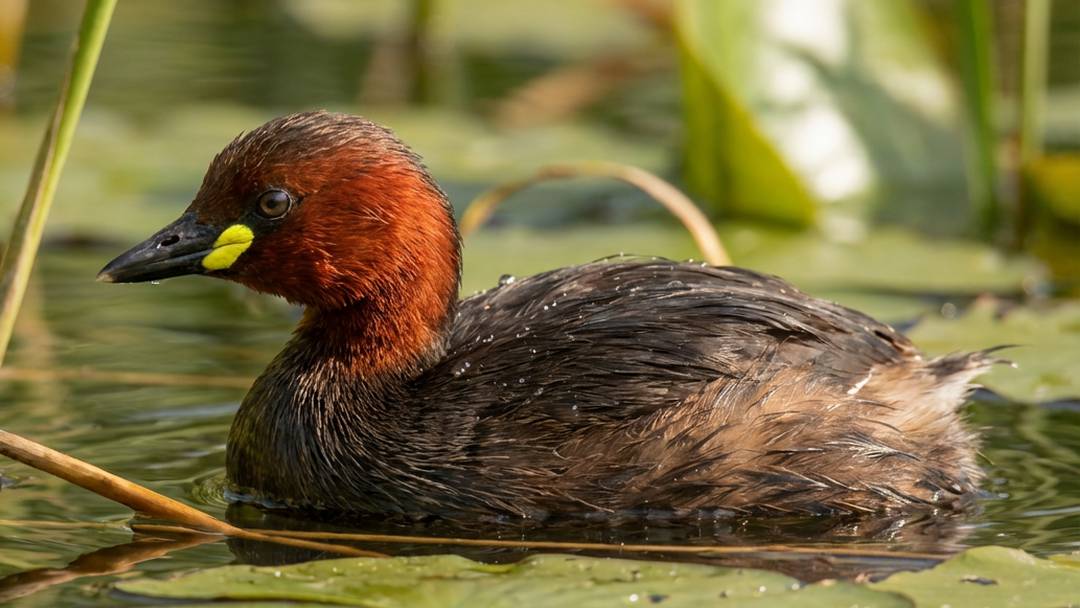
The Little Grebe has a very compact silhouette, a short neck, and a short, straight bill.
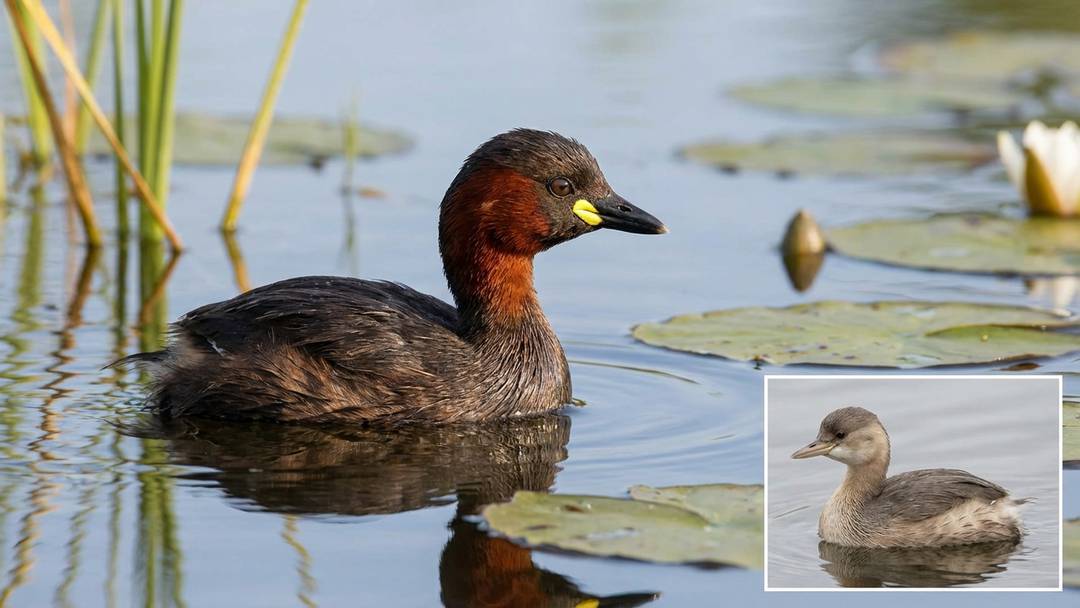
Summer (Breeding plumage): The bird is generally dark brown. The cheeks and neck take on a rich chestnut-red hue (hence its French name "Castagneux"). A very visible yellow-green spot (the gape) marks the base of the bill.
Winter (Non-breeding plumage): Colors fade. It becomes dull brown above and light beige/buff on the flanks and neck. The throat turns whitish. It then looks like a small beige ball of feathers.
Bill: Short, pointed, and relatively strong for its size, unlike the fine bill of the Pied Avocet or the spoon-shaped bill of the Eurasian Spoonbill.
Attitude: Often swims with the neck retracted, giving the impression of having no neck. The rear of the body is fluffy and raised.
In winter, the Little Grebe loses its rufous colors for a more discreet plumage.
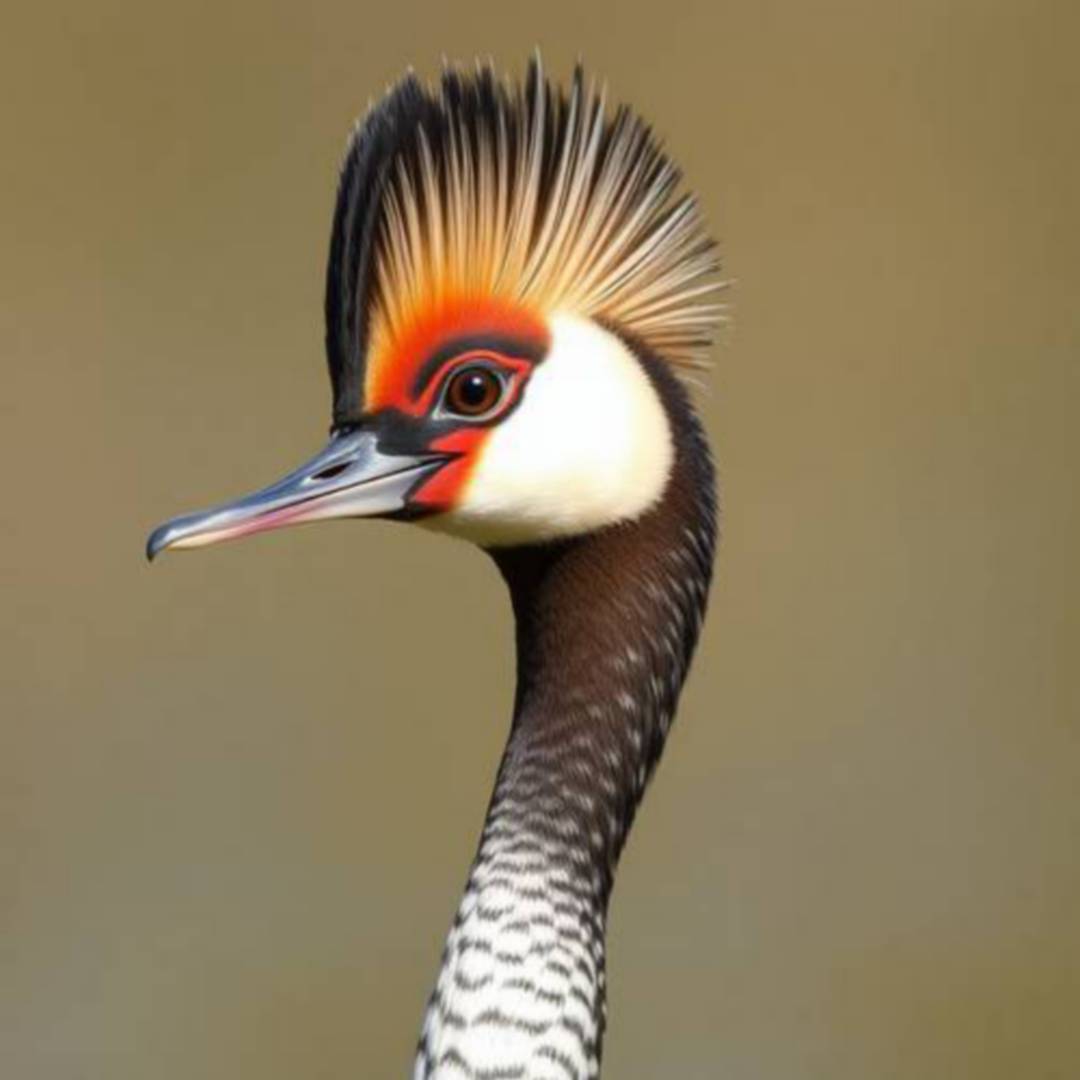
The Great Crested Grebe is almost twice as large. It has a very visible long white neck and, in summer, spectacular rufous and black crests and tippets. It often frequents more open waters.
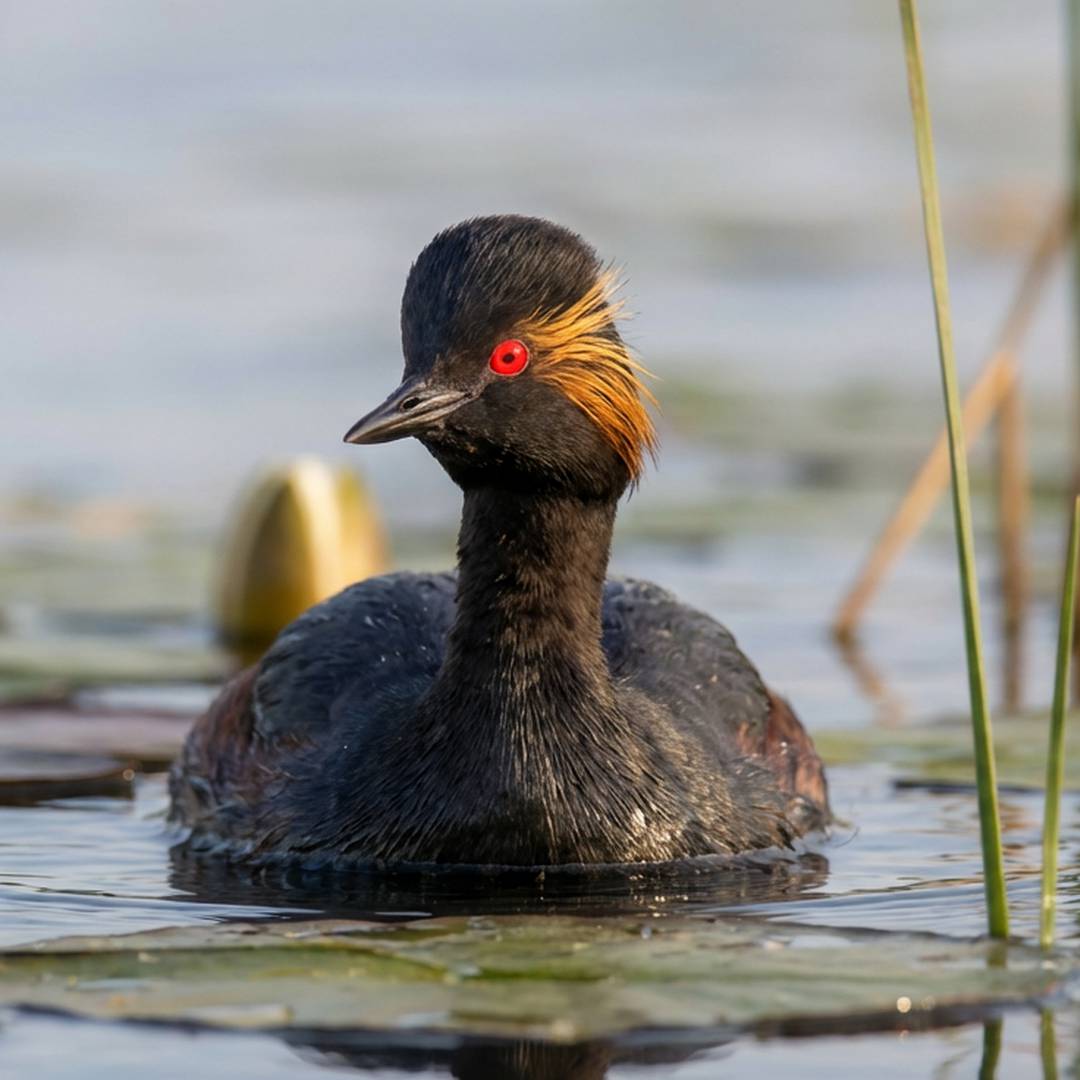
Slightly larger than the Little Grebe. In summer, it has a black neck and a tuft of golden feathers behind the eye. Its forehead is very steep ("high") and its eye is bright red, unlike the dark eye of the Little Grebe.
Song and Calls
The Little Grebe is a very vocal bird, especially in spring. Its song is often the best way to spot it in the dense vegetation where it hides, sometimes not far from a Little Egret waiting in ambush.
Song (Trill): A long series of high-pitched, rapid, wavering notes, resembling a crystalline whinny: "bi-bi-bi-bi-bi-bi...". This trill can be heard as a duet during courtship displays.
Alarm Call: A small metallic and sharp "pit", emitted when disturbed before diving.
0:00 / 0:00
Habitat and Distribution
The Little Grebe is widespread in Europe, Africa, and Asia. It is less demanding than other grebes regarding the size of the water body.
Habitat: It likes small ponds, pools, wide ditches, oxbow lakes, and lakes, provided there is abundant aquatic vegetation (reeds, lilies) to nest and hide. It is sometimes found in the company of the Black-winged Stilt in shallower marshes.
Wintering: In winter, if water bodies freeze, it may move to estuaries and sheltered coasts, but it generally prefers fresh water.
Distribution Map
Present all year (Resident)
Breeding range
Wintering range (Non-breeding)
Diet
It is an excellent diver that captures most of its food underwater. Its diet is varied:
It can stay submerged for several seconds and travel about ten meters before surfacing, often where least expected.
Reproduction
The breeding season runs from April to July. The pair builds a very characteristic nest.
The Nest: A mass of rotting aquatic vegetation, floating on the water but anchored to riverside vegetation (reeds or submerged branches). This decomposing vegetation releases heat that helps with incubation.
Clutch: The female lays 4 to 6 white eggs which quickly turn brown upon contact with damp vegetation.
The Chicks: The young are precocial and swim very early. They have striped black and white plumage (like zebras). They are often seen, as with the Great Crested Grebe, carried on the parents' backs to rest or take shelter.
Conservation Status
The Little Grebe is classified as "Least Concern" (LC) globally. It is a common and stable species.
However, like all wetland species (such as the White Stork or the Heron), it is sensitive to water pollution, the drying up of small ponds, and the loss of riparian vegetation necessary for nesting.
Frequently Asked Questions (FAQ)
Does the Little Grebe fly?
Yes, but it rarely flies during the day or for short distances. It prefers to dive in case of danger. During migration or dispersion, it flies mostly at night, with very rapid wingbeats.
Can it be seen in cities?
Yes, it is not uncommon to observe it in urban parks with ponds that have sufficient vegetation, or on quiet canals.