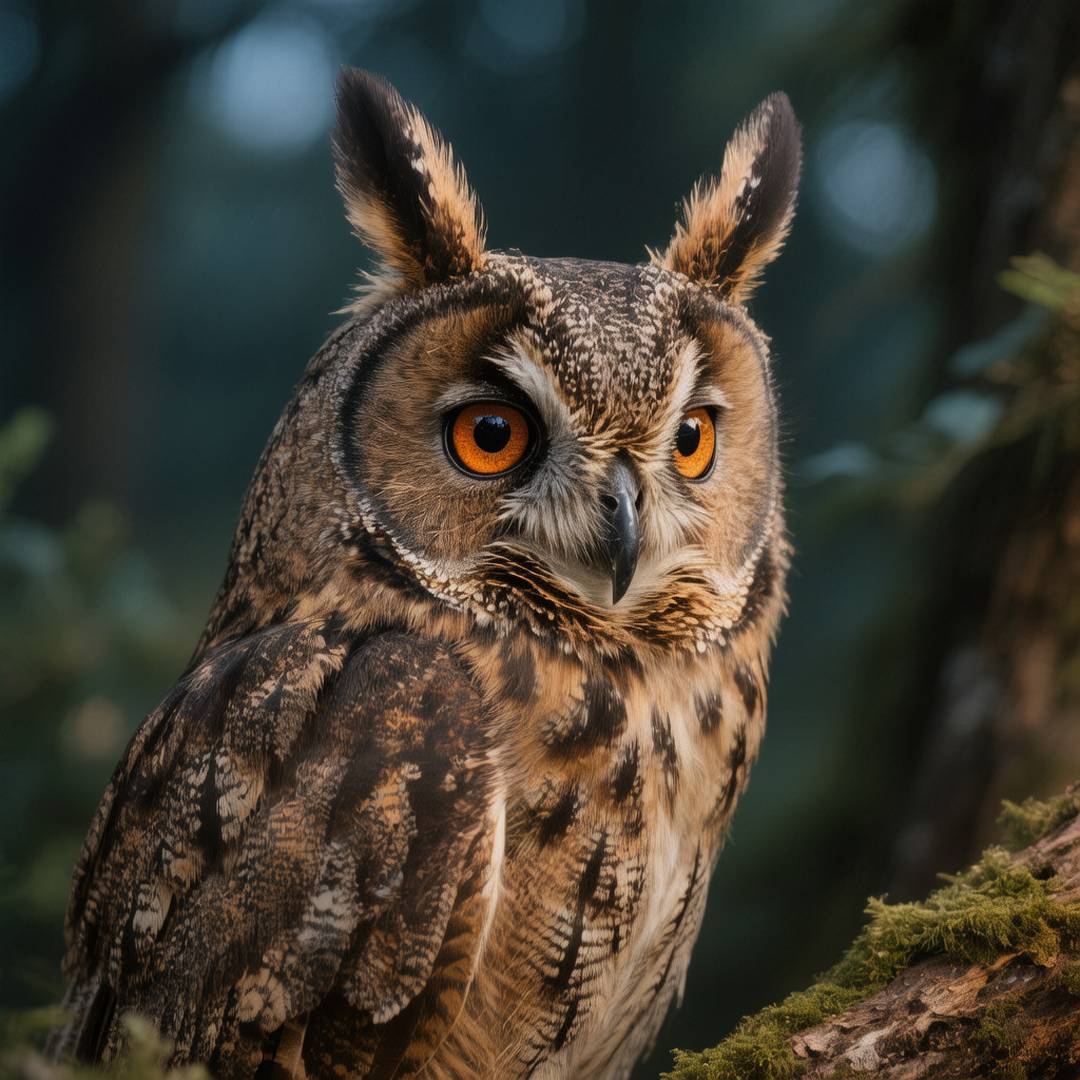
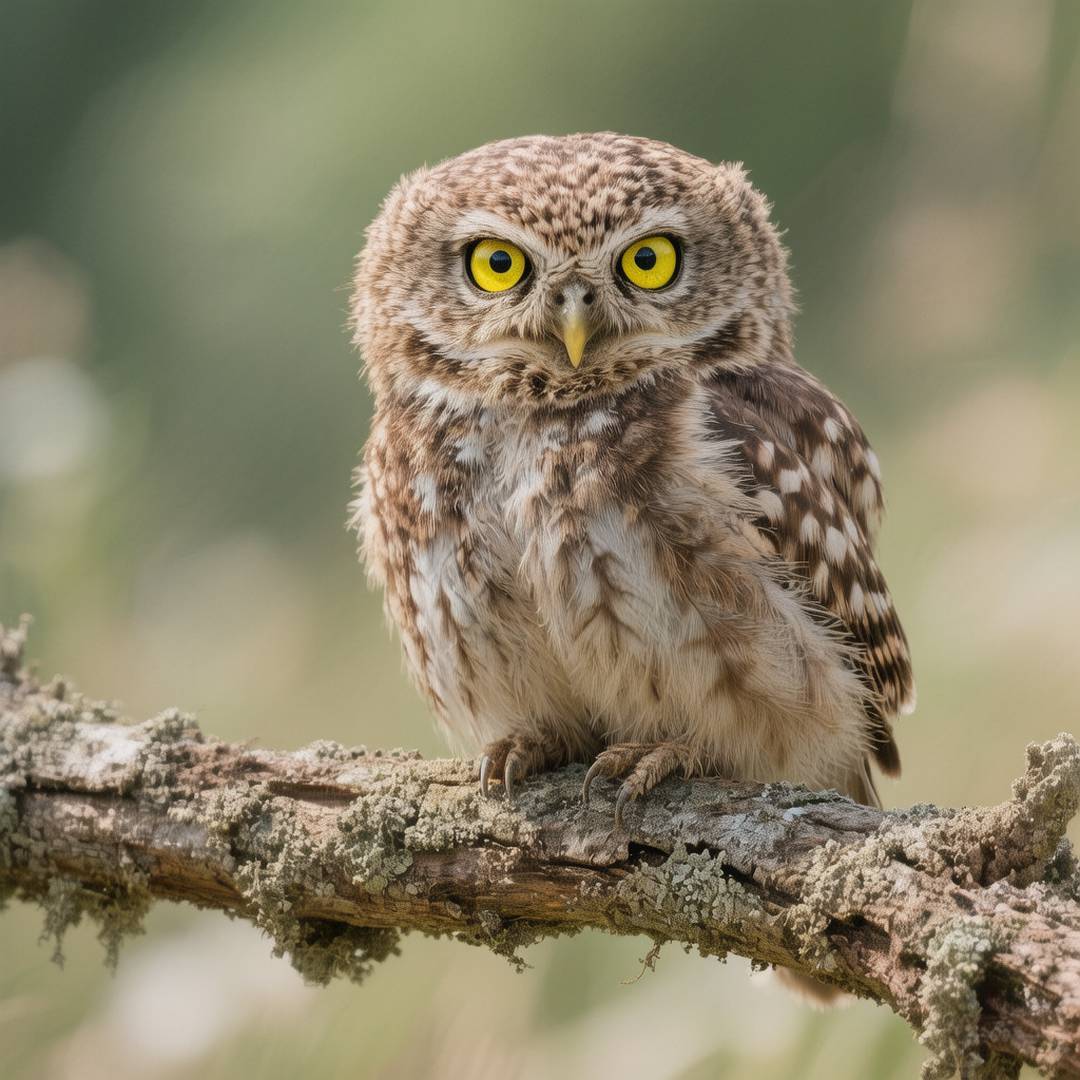
The Tawny Owl, a common and vocal nocturnal raptor.
Introduction
The Tawny Owl (Strix aluco), also known as the Brown Owl, is a medium-sized nocturnal Bird of Prey belonging to the Strigidae family. It is one of the most common and widely distributed owls in Europe, North Africa, and Asia. Primarily sedentary, it is highly adaptable and found in a variety of forest and semi-open habitats.
Length: 37 to 43 cm (14.5 to 17 in)
Wingspan: 81 to 96 cm (32 to 38 in)
Weight: 350 to 650 g (12 to 23 oz) for males; 450 to 800 g (16 to 28 oz) for females
The Tawny Owl is recognizable by its robust build, round head, and large, entirely black eyes, which give it a gentle expression, unlike many other nocturnal raptors with yellow or orange eyes. It is best known for its distinctive and mysterious call, the male's famous "hoo-hoo-hoo-HOOO". Although classified as "Least Concern" by the IUCN globally, it faces local threats related to habitat loss and road collisions.
Our Ornithologist's Advice
By the Les-Oiseaux.com Team, published November 4, 2025.
My personal advice: The Tawny Owl is a jewel of our nights. Hearing it is often easier than seeing it, as its camouflage is so perfect. Here's how to maximize your chances of observing or identifying it:
Listen to its calls: Its distinctive territorial hoot, a fluted and tremulous "hoo-hoo-hoo-HOOO" from the male, often followed by the female's higher-pitched "kvit-kvit", is the best indicator of its presence. Go out at dusk or dawn in parks, forests, or large gardens.
Black eyes, round head: If you are lucky enough to see one, look for an owl without ear tufts (no "small feather ears"), with a very round head and deep black eyes. This is a key feature that distinguishes it from other species like the Long-eared Owl.
Habitat: It loves old trees with cavities for nesting. Look in hollows of tree trunks, old chimneys, or even suitable nest boxes. During the day, it often perches very close to the trunk or in dense foliage, where its cryptic plumage makes it almost invisible.
Indirect clues: Look for owl pellets (regurgitated balls of fur and bones) at the base of trees. They reveal its diet and consistent presence.
The Tawny Owl is a fascinating indicator of local biodiversity. Its ability to live close to us, even in cities, makes it an emblematic species of nocturnal fauna.
Have you observed Tawny Owl?
Share your experience and photos! Your observations enrich the Les-Oiseaux.com community.
You can share as a guest or create an account to track your contributions.
Identification
The Tawny Owl is a medium-sized, robust, and stocky nocturnal raptor, easily recognizable even without direct observation thanks to its distinctive vocalizations. Sexual dimorphism is slight, with the female being marginally larger than the male.
Plumage: The plumage is cryptic, providing excellent camouflage in its forest environment. There are two main color phases: a grey-brown phase (more common) and a rufous-brown phase. The body is densely streaked with dark on the underside and barred on the upperparts. The facial disc is subtly contrasted but present.
Head: The head is large and round, without ear tufts (the "feather ears" seen in some owls).
Eyes: The eyes are large, round, and entirely black, which gives the Tawny Owl a characteristic gentle facial expression and distinguishes it from most other European owls that have yellow eyes.
Beak: The beak is short and hooked, partially hidden by facial feathers.
Legs: The legs are fully feathered down to the powerful, dark talons.
Juvenile: Young birds have downy plumage, generally paler and less marked than adults, with already dark eyes.
Silhouette and Flight: In flight, its silhouette is massive, with broad, rounded wings. Its flight is silent and powerful, often in a straight line through trees, or gliding when hunting.
Scientific Dimensions and Records (Tawny Owl)
Characteristic
Male
Female
Record / Average
Length
37 – 43 cm (14.5 – 17 in)
37 – 43 cm (14.5 – 17 in)
37 – 43 cm (14.5 – 17 in) (adults)
Wingspan
81 – 96 cm (32 – 38 in)
81 – 96 cm (32 – 38 in)
81 – 96 cm (32 – 38 in) (adults)
Weight
350 – 650 g (12 – 23 oz)
450 – 800 g (16 – 28 oz)
350 – 800 g (12 – 28 oz) (adults)
Lifespan
Up to 18 years (in the wild)
Up to 18 years (in the wild)
Around 10-15 years
These figures confirm the Tawny Owl as a medium-sized nocturnal raptor, with a remarkable lifespan in its natural environment.
Not to be confused with...
Long-eared Owl (Asio otus)
The Long-eared Owl (Asio otus) is smaller and more slender than the Tawny Owl. It is distinguished by its long, prominent ear tufts (often raised, giving the impression of ears), finer plumage, and orange eyes. It also prefers more open habitats with some groves.
Little Owl (Athene noctua)
The Little Owl (Athene noctua) is significantly smaller and stockier than the Tawny Owl. It has a flatter head, prominent white eyebrows, and bright yellow eyes. Moreover, it is often active during the day, which is rare for the Tawny Owl. Its habitat is more open, including agricultural areas and old buildings.
Song and Calls
The Tawny Owl is a very vocal species, especially during the breeding season and in autumn. Its calls are among the most recognizable in European nocturnal fauna.
Its calls can include:
Male's Territorial Call: The most characteristic call is a fluted and tremulous "hoo-hoo-hoo-HOOO" hoot. It can be emitted every few seconds for long periods.
Female's Call: The female often responds to the male with a higher-pitched and shrill "kvit-kvit" or "kewick", sometimes repeated rapidly. The male himself may emit a simple "kvit" as an alarm or to signal his presence.
Duet: Partners frequently perform a duet, with the male hooting and the female responding with her sharp calls.
Contact Calls: Various other clucking, whistling, and bobbing sounds can be heard, especially near the nest or between partners.
Calls of Young: Young birds, demanding food, emit a repetitive and very insistent "psit" or "tchip".
0:00 / 0:00
Habitat and Distribution of Tawny Owl
The Tawny Owl is a highly adaptable species, which explains its wide distribution. It favors habitats where it can find both nesting sites (tree cavities, old buildings) and varied hunting grounds.
It mainly occupies:
Deciduous and mixed forests, especially those with old trees offering cavities.
Parks and large gardens, including in urban and suburban areas.
Orchards and woodland edges.
Agricultural areas with hedges, groves, or isolated trees.
Its range extends across much of Europe, North Africa, and temperate Asia. It is primarily a sedentary species, although young birds may disperse after fledging. It can be found from sea level up to 2000 meters (6,560 ft) in altitude, or even higher in Asia.
Distribution Map
Year-round Presence (Resident)
Breeding Area
Non-breeding (Wintering) Area
Passage Area (Migration)
Diet
The Tawny Owl is an opportunistic and generalist nocturnal predator, its diet reflecting the availability of prey in its territory.
It primarily feeds on:
Small mammals: This is its preferred prey, including voles, mice, shrews, and young rabbits. In urban environments, it can also consume rats.
Birds: It captures a variety of small birds, often surprised on their nocturnal roosts.
Amphibians and reptiles: Frogs, toads, and lizards can be part of its diet, especially during wet periods.
Insects: Large insects like cockchafers or beetles, especially in summer.
Earthworms: Particularly on rainy nights, it can hunt on the ground.
It usually hunts from a high perch, using its exceptional hearing and night vision to locate prey before silently swooping down on them. It can also hunt in low flight through dense vegetation.
Reproduction
The Tawny Owl is one of the earliest breeding owls, with the season able to start as early as late winter. Pairs are generally faithful to their territory and partner for life.
Nest: The Tawny Owl does not build a nest. It uses natural cavities in old trees (e.g., woodpecker holes, branch hollows), old corvid or diurnal raptor nests, or artificial nest boxes. The nesting site is chosen by the female.
Eggs: The female typically lays 2 to 6 pure white, spherical eggs (most often 3 to 4). Laying occurs between February and April, and incubation is carried out almost exclusively by the female for 28 to 30 days. The male feeds the female during this period.
Raising the Young: Chicks are born blind and covered in white down. They remain in the nest for about 30 to 35 days, during which both parents care for their feeding. After leaving the nest, the young (called "branches" because they climb and move in nearby branches) remain dependent on adults for food for several weeks, or even months.
Courtship Display: Intense territorial calls and duets are an important part of courtship and maintaining pair bonds.
Conservation Status
The Tawny Owl is classified as "Least Concern" (LC) by the IUCN (International Union for Conservation of Nature) globally. Its population is stable and even slightly increasing in some regions of Europe, particularly in urban areas where it adapts well.
Despite its favorable classification, the species faces specific threats, especially at a local level:
Habitat Loss: The disappearance of old trees with cavities, due to forestry or urban development, reduces available nesting sites.
Road Collisions: Nocturnal hunting near roads exposes owls to high risks of collisions with vehicles.
Toxic Products: The use of rodenticides (anticoagulants) to control rodent populations can lead to secondary poisoning of owls that consume these poisoned prey.
Disturbance: Although tolerant, excessive disturbances during the nesting period can have an impact.
Conservation measures include the preservation of old trees, the installation of artificial nest boxes, and public awareness about the dangers of rodenticides and road collisions.
Frequently Asked Questions (FAQ)
How to identify Tawny Owl?
The Tawny Owl is a medium-sized nocturnal raptor, without ear tufts (feathers on its head). It is recognizable by its round head and large, entirely black eyes. Its plumage is cryptic, varying from grey-brown to rufous, with dark streaks and a subtly marked facial disc. It is often more easily detected by its distinctive call.
Where does Tawny Owl live?
The Tawny Owl is highly adaptable and lives in a variety of habitats, including deciduous and mixed forests, parks, large gardens, and even urban areas with enough mature trees for nesting and roosting. It requires tree cavities for reproduction.
What does Tawny Owl eat?
Its diet is very varied and opportunistic. It primarily hunts small mammals such as voles, mice, and shrews, but also small birds, amphibians, reptiles, and large insects. In urban environments, it may even prey on rats.